
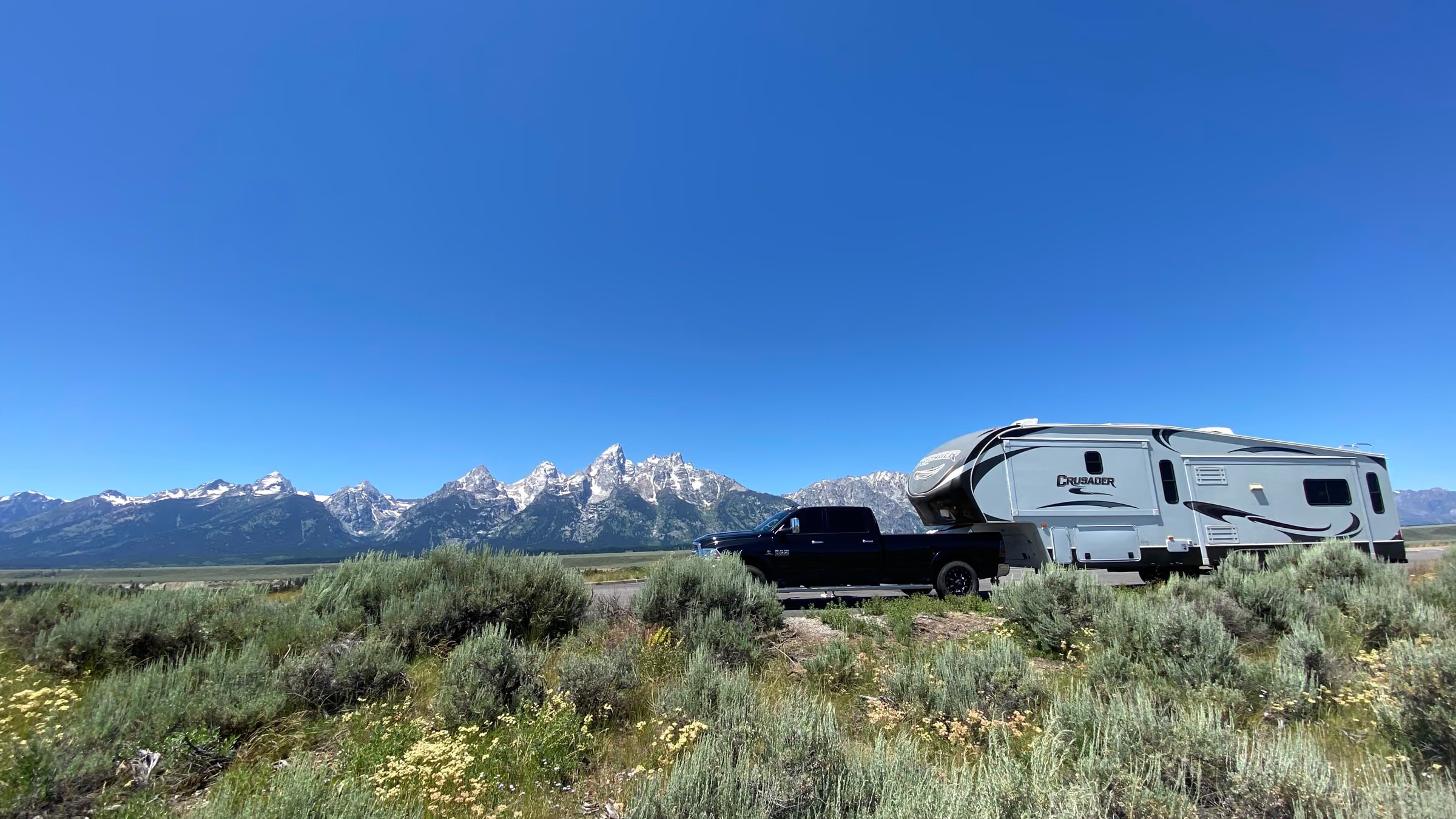
Tips to keep your RV road ready
Simple jobs you can handle yourself, from a tech who has worked on RVs since 2008.
And when a job is more than you want to take on, we’ll come to you.
Common RV maintenance tips
A little upkeep through the year heads off most of the big repairs we see. Here’s where to start.
Roof and seals
Clean the roof and inspect the sealant around vents, skylights, the AC and every edge at least twice a year. Reseal any cracks before water finds its way in.
Wash the outside
Wash every few months with an RV-safe soap, and after dusty or salted roads. A coat of wax once or twice a year protects the finish.
Keep the inside fresh
Clean out the fridge, vacuum, wipe down the vents and fans, and prop cabinets open in storage to keep mildew away.
Slides and awning
Clean and treat slide-out seals, and check the awning fabric and arms for wear each season.
Batteries
Check connections and water levels monthly, and keep batteries charged while the RV is parked.
Tires
Check pressure before every trip, look for cracks in the sidewalls, and cover them in storage to block the sun.
Safety detectors
Test the smoke, carbon monoxide and propane detectors each season, and replace batteries as needed. Keep in mind detectors have a life span, and replacing them about every 4 years is recommended.
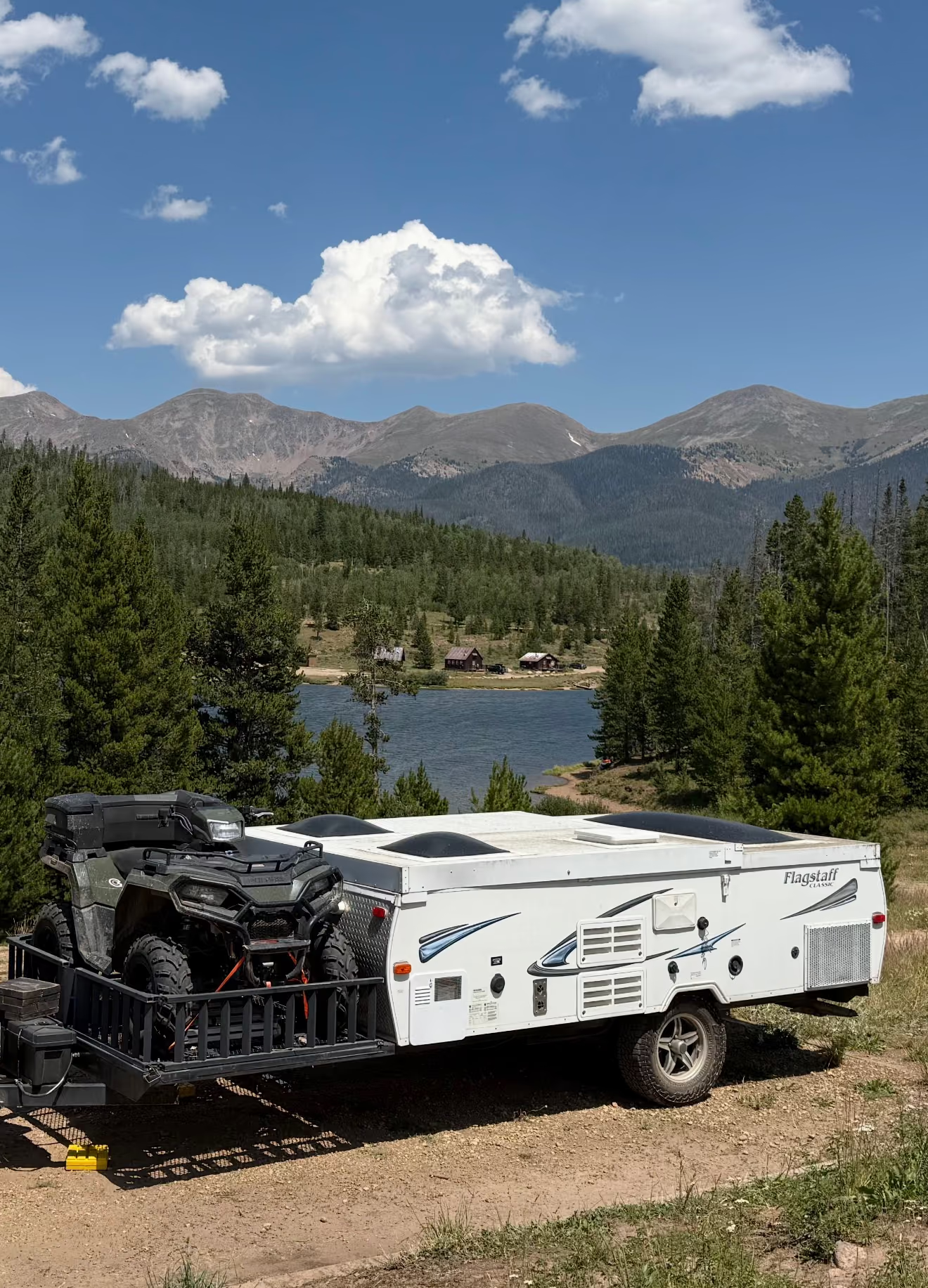
When to winterize your RV
Water left in your lines can freeze, expand and crack pipes, fittings and your water heater. Along the Front Range, that can happen earlier than you think.

Before the first hard freeze
Plan to winterize once overnight lows start dipping below 32°F. In Northern Colorado that’s often by early to mid October.
Before it goes into storage
If your RV will sit for the season, winterize it before it’s parked, even if the forecast still looks mild.
After any cold-weather trip
Camping into late fall? Winterize again when you get home, since a single cold night can do the damage.
How to winterize your RV
You’ll need two to three gallons of non-toxic RV antifreeze, a water heater bypass and a pump converter kit or hand pump. Never use automotive antifreeze.
Drain and dump the tanks.
Empty the fresh water tank, then dump and flush the black and gray tanks.
Drain the water heater.
Turn it off and let it cool fully, then remove the drain plug or anode rod and let it empty. Never drain it while it’s hot or under pressure.
Open the low point drains.
Open every faucet, hot and cold, and the low point drains so the lines empty. Close everything back up when they run dry.
Bypass the water heater.
Set the bypass valves so antifreeze skips the tank. Otherwise you’ll fill it with gallons you don’t need.
Pump antifreeze through the lines.
Using your water pump and converter kit, open each faucet one at a time, hot then cold, until pink antifreeze runs. Don’t forget the shower, the outdoor shower and the toilet.
Protect the drains.
Pour a cup of antifreeze into each sink and shower drain and a little into the toilet bowl to protect the traps and seals.
Rather we winterize it for you?
We offer RV winterization services wherever your rig is parked, at home, in storage or at your campsite. We’ll take care of every step and check for leaks while we’re there. Every winterization we do comes with a guarantee, so if anything isn’t as expected in the spring, let us take care of it.
When should I book?
September and early October fill up fast, so the sooner the better. Call or send a request and we’ll find a time before the first freeze.
Do you de-winterize in the spring too?
Yes. We’ll flush the antifreeze, sanitize the system and get your water running for the first trip of the season.
What if I already winterized it myself?
If you’re not sure you got every line, we can come out and double check before the cold sets in.
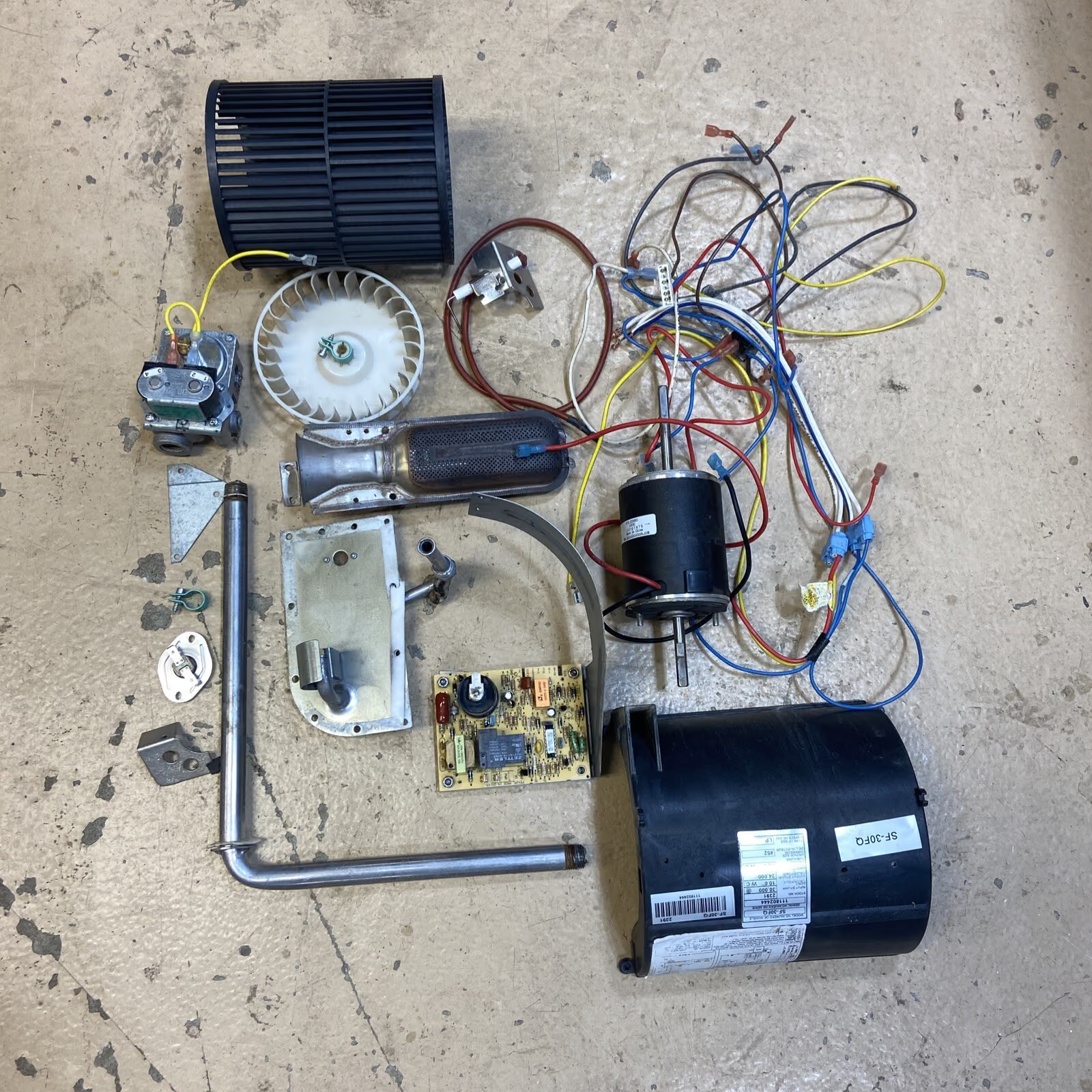
Looking for parts?
Just give us a call. We have access to most all the manufacturers, and if we don’t have it, we can point you in the right direction.
Most all manufacturers
Appliances, plumbing, electrical and more, sourced from the brands in your RV.
One call to start
Tell us your RV and the part you’re after, and we’ll check what we can get.
Pointed the right way
If it’s not something we can get, we’ll tell you where to look.
More to come
We’re adding new tips all the time. Follow along to see our latest, and tell us what you’d like to learn next.
Suggest a topic
Send us an ideaIs there a repair or project you’d like us to cover? Let us know and we may make it our next tip.